



E-bike popularity increases among Idaho teens — and so do injuries
Published at
Harllie Stevenson, Idaho Statesman
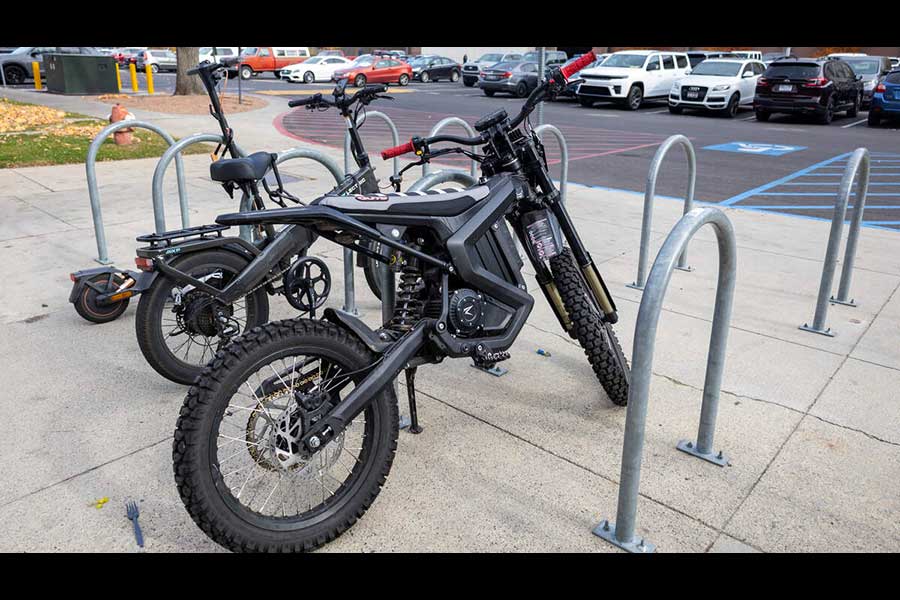
BOISE (Idaho Statesman) — In the 1990s, it was the BMX bike. In the 2000s, it was the Razor kick scooter. In the 2020s, the latest must-have on two wheels is the e-bike.
Powered by a rechargeable battery that helps riders as they pedal — or, in some cases, propels them with no effort at all — e-bikes have been around for years, but have become increasingly popular on Idaho streets and pathways.
And with that, injuries have become more common, too.
According to data from the Idaho Department of Health and Welfare, hospitals across Idaho have recorded more than 1,000 e-mobility emergency room visits since July. More than half of those, 561, were in Ada County. July saw a record spike, with 322 visits statewide.
E-mobility is defined as electric-powered devices such as e-scooters and e-bikes.
At Saint Alphonsus Regional Medical Center in Boise, patients injured while riding e-bikes and e-scooters are a common sight, Dr. Brian Coates, the hospital’s medical director of trauma and surgical services, said in a phone interview.
“We see and evaluate patients that sustain injuries from e-scooters or e-bikes on a daily basis,” Coates said. “It has become the norm at our facility to see patients that sustain injuries from this mechanism. Certainly, it’s weather dependent … but when it’s a nice day outside and weather allows, we see these every single day.”
There has not just been a spike in injuries, but a spike in injuries that require hospitalization or surgical intervention — and even those that result in death, Coates said.
The injuries are often consistent with those of a motorcycle crash, rather than traditional bicycle crashes, Coates said, due to their high-impact, high-energy nature. It’s resulted in a “significant uptake” in traumatic brain injuries, often resulting in patients having lifelong disabilities, Coates said.
These injuries have not gone unnoticed by Ada County officials, who have spent the past year racing to mitigate the problem.
Boise looks at e-bike safety
Over the past five years, Boise has made transportation safety a priority, working with the Ada County Highway District and the Boise Police Department on infrastructure improvements, public education and enforcement, Bre Brush, senior policy adviser at the city of Boise, said in an interview.
But recently, the city has not just had to turn its attention to cars or buses, but e-bikes and e-motos as they rise in the private market, Brush said.
The city is focusing on a behavior change campaign that encourages riders to slow down and is also looking for ways to partner with local bike shops and equip them with tools to educate consumers, Brush said.
This summer, the Boise City Council unanimously passed an emergency ordinance that classified certain e-bikes as e-motos. Under the ordinance, devices with motors rated at more than 750 watts, and devices capable of reaching speeds above 28 mph, must be insured and registered and operated by licensed riders within city limits. They must stick to roads.
The city also established an E-mobility Task Force in August to evaluate existing regulations and consider additional safety measures, such as education, enforcement and infrastructure changes, that they will present to city council next month, City Council Member Jimmy Hallyburton said in an interview.
“They’ve had very lively discussions,” Hallyburton said. “… The discussions can be very difficult because it’s emotional, especially when you hear of kids or adults dying using one of the vehicles.”
Teens face the most impacts
In 2026, boys aged 11-15 accounted for the most e-mobility emergency room visits in Idaho, with 306 as of Nov. 12, according to hospital data from the Idaho Department of Health and Welfare.
Injuries among patients under the age of 18 continue to increase, Coates said.
Manufacturers have found their marketing niche in young teenagers, it seems to Hallyburton. He said his main concern around e-bikes are companies who market these powerful devices to kids and allow riders to bypass local regulations through app updates or hardware alterations, making it easier for riders to modify bikes to reach Class 3 speeds.
E-bikes are divided into three classifications.
Class 1 is pedal assistance only up to 20 miles per hour. Class 2 is throttle assistance up to 20 miles per hour, with no pedaling required. Class 3 is pedal assistance up to 28 miles per hour and is the fastest e-bike classification.
Mitchell Gratton, an employee at Pedego Electric Bikes in Boise, said “anybody smart enough” can alter the bikes to go faster than intended, but Pedgeo makes that difficult with their models and sells mainly to middle-age adults who are given the safety basics of their bike.
“Most of it is common sense; if you don’t have it, you shouldn’t be riding the bike,” Gratton said.
But that common sense may not be so easily applied by young teens, who are suddenly being equipped with a newfound power of speed without knowing the ramifications.
“The teens are in this unfortunate situation where it really seems cool, it seems really fun, their friends are doing it,” Hallyburton said. “And then their parents don’t necessarily know any better. So I look at the manufacturers as really taking advantage of these kids and these families.”
States such as Colorado and New York have passed laws that prohibit manufacturers from labeling any device that exceeds 750 watts as an “e-bike.”
While Idaho has been able to enforce sticker labeling of the e-bike classifications, Hallyburton said he isn’t sure if Idaho has the authority to follow in the footsteps of Colorado and New York. Certain regulations may need to happen at the federal level, he said.
‘Let’s not demonize’ the teens, council member says
From spring through summer, complaints of teenagers on e-bikes was the “No. 1 thing” people were reaching out to Hallyburton about, he said. Teenagers in packs doing wheelies is not an easy sight to miss, and Hallyburton said it caused many people to be upset, especially on the Greenbelt as growth accumulates on the popular trail.
But many complaints were out of worry, rather than anger.
Hallyburton said it was concerning for folks to see kids that are “10, 12, 14 years old without a driver’s license, going 45-50 miles an hour down the street.”
These concerns have since died down in light of the task force and the e-moto ordinance, Hallyburton said, as residents recognize a change is being made.
Still, the tendency to blame unruly teenagers remains. But Hallyburton said people shouldn’t be so quick to point fingers at teenagers, who, like many at that age, just want to have fun.
“Let’s not demonize these kids and these teens,” Hallyburton said. “They’re getting into a good amount of trouble, but their parents and these manufacturers are providing them with something that’s completely unsafe, and they’re making decisions that somebody else has given them access to.”
Discussions about expanding the Greenbelt have followed the intake of complaints, but the most serious issue involves impaired or reckless drivers colliding with e-bikes, Hallyburton said.
“The hard part about all these discussions is that … the larger problem is always the vehicles,” Hallyburton said. “Anytime there’s a fatality … it’s the automobile’s or the driver’s fault.”
This September, Carson Chrapkowski, a 14-year-old from Middleton, was riding an e-bike when he was struck and killed by an alleged drunken driver.
A few months before that, 15-year-old Boise teen Sterling Wolfgang Thomas was riding his e-bike when he was struck and killed by a motorcyclist.
Chrapkowski was doing nothing wrong, Jeff Smith, chief of Middleton Police, said in an interview. What happened to him was absolutely not “an e-bike story,” but an impaired driving story, Smith continued.
Still, e-bike riders are experiencing significant injuries on their own.
In the emergency room at Saint Alphonsus, head and neck injuries are the most prevalent, followed by extremity fractures, Coates said. The lack of a helmet, kids riding devices not designed for their size, and high speeds on pedestrian pathways all pose safety risks for the young e-bike riders, he said.
The solution is not to take these bikes away, Coates said, but to educate riders and consumers on the responsibility that should come with operating them, which includes riding sober, wearing a helmet and riding on designated bike lanes rather than pedestrian pathways.
“As a community, we all have a responsibility to assure that there’s safeguards in place to make sure that these devices are used in an appropriate way,” Coates said.